Bespoke Strength Alternatives for Busy Executives

Table of Contents
Why Bespoke Strength Coaching Fits the Executive Schedule
Quick Comparison: Bespoke Strength Options for Busy Executives
Personal Training Apps for Executives: What They Do Well and Where They Fall Short
Online Personal Training vs. In-Person Coaching: Which Fits an Executive Calendar
Short Strength Workouts That Still Build Muscle
The minimum effective dose
A 30-minute template that survives a bad week
Adjusting for travel and irregular weeks
What to expect, realistically
What a Custom Strength Training Program Should Include
Pricing, Time Commitment, and Accountability Compared
How the cost structure differs by model
Time commitment, honestly stated
Accountability in three tiers
A simple value test
Frequently Asked Questions
Last Updated: October 21, 2026
Why Bespoke Strength Coaching Fits the Executive Schedule
Bespoke strength coaching is a one-to-one training arrangement where the program is built around a specific person's physiology, calendar, travel load and injury history rather than pulled from a template.
At FSL Training, we see this constantly. A client commits to five sessions a week, a board cycle hits, and the whole routine collapses in three weeks.
Three things separate real bespoke coaching from the standard gym package:
Exercise selection tied to your body, not to a generic program
Training frequency calibrated to your recovery, travel and stress load
Accountability that survives a week of 6 a.m. flights
The alternatives below range from full-service coaching to self-guided apps. Each fits a different executive profile, and the honest answer for you depends on how irregular your calendar actually is.
Quick Comparison: Bespoke Strength Options for Busy Executives
Here is how the main alternatives stack up on the factors that decide whether an executive sticks with a program: personalization, schedule fit, accountability and equipment needs.
Option | Personalization | Schedule Fit | Accountability | Best For |
Bespoke 1:1 coaching (FSL Training) | Highest: built around your physiology, travel and stress load | High: sessions and remote support flex with your week | Coach-led, with app support between sessions | Executives with irregular travel and high-stakes stress |
|
|
|
|
|
|
|
|
|
|
|
|
|
|
|
In-person personal training | High, if the trainer is strong | Low: fixed appointments | High, in the session only | Executives with a stable weekly routine |
The pattern is clear. Apps win on flexibility, coaching wins on personalization and accountability, and the best fit depends on which of those you can least afford to lose.
Personal Training Apps for Executives: What They Do Well and Where They Fall Short
Personal training apps for executives deliver convenience and structure, but most stop short of true personalization.
Barbell Logic
Algorithmic programming responds to what you log, not to what your body is telling you.
Some apps lean on variety and low-impact options. That is useful for general movement, but it is not a bespoke strength tool, and treating it as one leads to frustration.
Where apps fall short, consistently:
No one adjusts the plan when your week falls apart
No eyes on technique, which matters more as loads climb
Progress tracking measures output, not readiness
Nutrition and stress management sit outside the app entirely
Watch Out The most common mistake executives make with training apps is buying three of them. Fitness, nutrition and sleep tracking each live in a separate silo, and nobody connects the dots. The result is more data and less progress.
Online Personal Training vs. In-Person Coaching: Which Fits an Executive Calendar
Online personal training vs. in-person coaching comes down to one trade-off: flexibility versus hands-on correction. Online coaching wins on schedule fit. In-person coaching wins on technique and immediate feedback.
Human trainers can build progressive, periodized strength programs around the equipment a client can access, which means a hotel gym or a home setup can still support real strength gains.
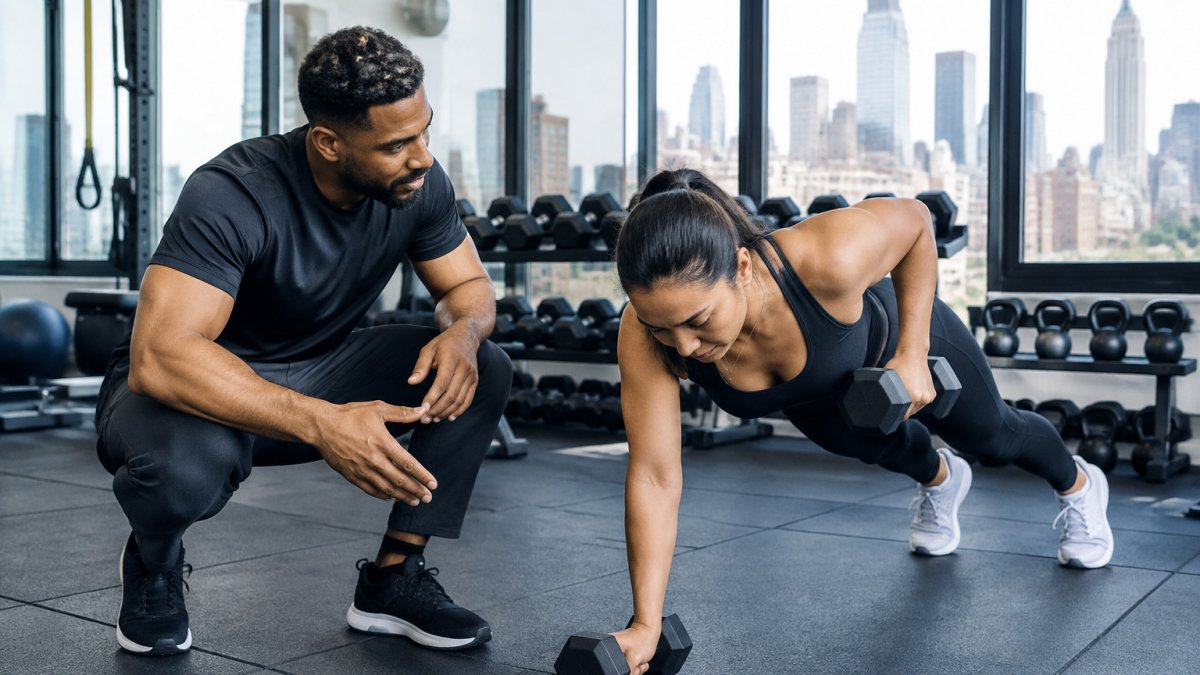
In-person coaching remains the better choice when technique is the bottleneck.
Our recommendation: match the format to your constraint. If your calendar is the constraint, go online.
Short Strength Workouts That Still Build Muscle
Short strength workouts build muscle when they prioritize compound lifts, adequate intensity, and controlled rest. Thirty minutes is enough. What is not enough is thirty minutes of wandering between machines.

The minimum effective dose
Two to three full-body strength sessions per week, each 30 to 45 minutes, can be enough to build and maintain muscle for a busy adult who is not an advanced lifter. Below two sessions per week, maintenance can become the realistic ceiling. Above four, recovery and schedule risk may climb faster than results. The sweet spot for an executive with an irregular calendar can be two anchored sessions plus one optional short session.
A 30-minute template that survives a bad week
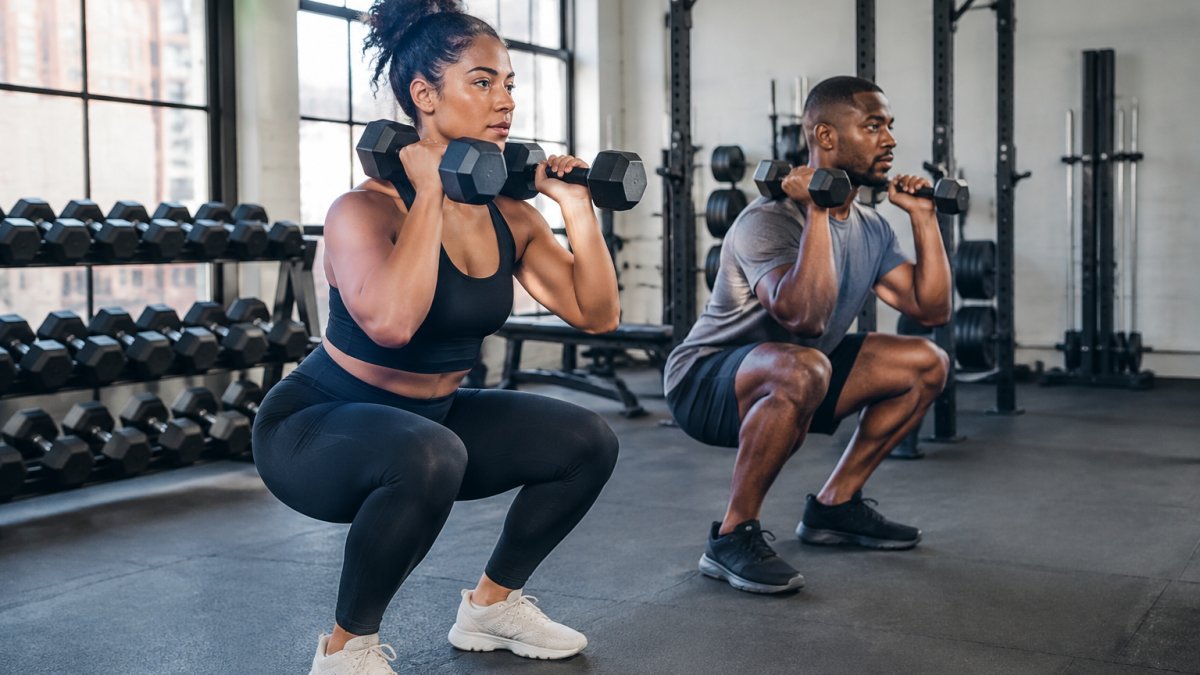
The structure we use with time-pressed clients is a strength circuit built on supersets: pair a lower-body push with an upper-body pull, rest briefly, repeat. Squat, push-up, row, plank. Three rounds covers the major movement patterns in under 30 minutes.
A few principles make short sessions work:
Lead with the heaviest compound lift while you are fresh
Pair opposing muscle groups to cut rest periods without cutting quality
Keep rest periods deliberate, not accidental, 60 to 90 seconds between supersets
Use a proper warm-up, five minutes, every time
Track loads, because progressive overload is what drives muscle hypertrophy
Adjusting for travel and irregular weeks
A hotel gym with dumbbells up to 50 pounds and a bench supports the same template. Swap the barbell squat for a goblet squat or split squat, keep the push-up and row, and hold the plank. The movement patterns stay; only the loading changes. That is the difference between a program that bends and one that breaks.
What to expect, realistically
Measurable strength gains, visible muscle change, and meaningful body-composition change can be achieved when nutrition is handled alongside training. Anyone promising faster is selling, not coaching. Sustainable physiological adaptation requires consistency over time, a principle that remains central to effective strength training programs for women navigating the specific hormonal shifts of their fifth decade.
Pro Tip The 10-minute circuit is the executive's secret weapon on chaotic days. One round of squat, push-up, row, and plank, repeated twice, preserves the habit on days when a full session is impossible. Consistency beats intensity across a quarter.
What a Custom Strength Training Program Should Include
A custom strength training program should include an assessment, a periodized plan, defined training frequency, and a built-in review cycle. Anything less is a template with your name on it.
Here is the checklist we would apply to any program, ours or anyone else's:
A movement assessment covering injury history and restrictions
Exercise selection matched to your physiology and available equipment
Training frequency set against your real calendar, not an ideal one
Progressive overload built in, with loads recorded
Warm-up and mobility work specified, not optional
Recovery and rest periods treated as part of the plan
The last item is where most programs quietly fail. Without a review cycle, a plan designed for January is still running in June, long after your schedule and capacity have changed.
Pricing, Time Commitment, and Accountability Compared
Most guides to strength training for executives dodge the money question. That is a mistake, because the real decision is not which option is cheapest. It is which option delivers the most accountability per dollar and per hour you actually have. Below is a decision framework you can apply to any provider, including us.
How the cost structure differs by model
Pricing tracks the amount of human attention in the model. The four common structures look like this:
Self-guided apps: a monthly subscription, typically in the low double digits to low triple digits per month. You pay least and self-manage most.
Online personal training: a monthly coaching fee, commonly in the low-to-mid hundreds per month, sometimes billed per session. You get a human program and periodic check-ins.
In-person personal training: billed per session or in packages, often in the range of $75 to $200 per session in major metro markets, with studio and trainer credentials driving the spread.
Bespoke 1:1 coaching: a monthly retainer that bundles scheduled sessions, remote support, nutrition guidance, and review cycles. It is the highest line item and the lowest effort burden on you.
Confirm current rates directly with any provider. Published prices change, and the format and contact frequency move the number more than the brand does.
Time commitment, honestly stated
The more useful comparison is hours, not dollars:
Model | Training time per session | Admin/check-in time | Setup and travel |
Self-guided app | 30-45 min | 5-10 min logging | None |
Online personal training | 30-60 min | 15-30 min weekly check-in | None |
In-person training | 45-60 min | Minimal | 20-40 min round trip |
Bespoke 1:1 coaching | 30-60 min | 15-30 min weekly, plus async messaging | None if remote; varies if in studio |
The hidden cost in every model is decision fatigue. An app that makes you choose the session each day costs you ten minutes of willpower before you touch a weight. A coached program that tells you exactly what to do removes that tax.
Accountability in three tiers
Self-managed: the app reminds you, and that is it. Adherence depends entirely on your own systems.
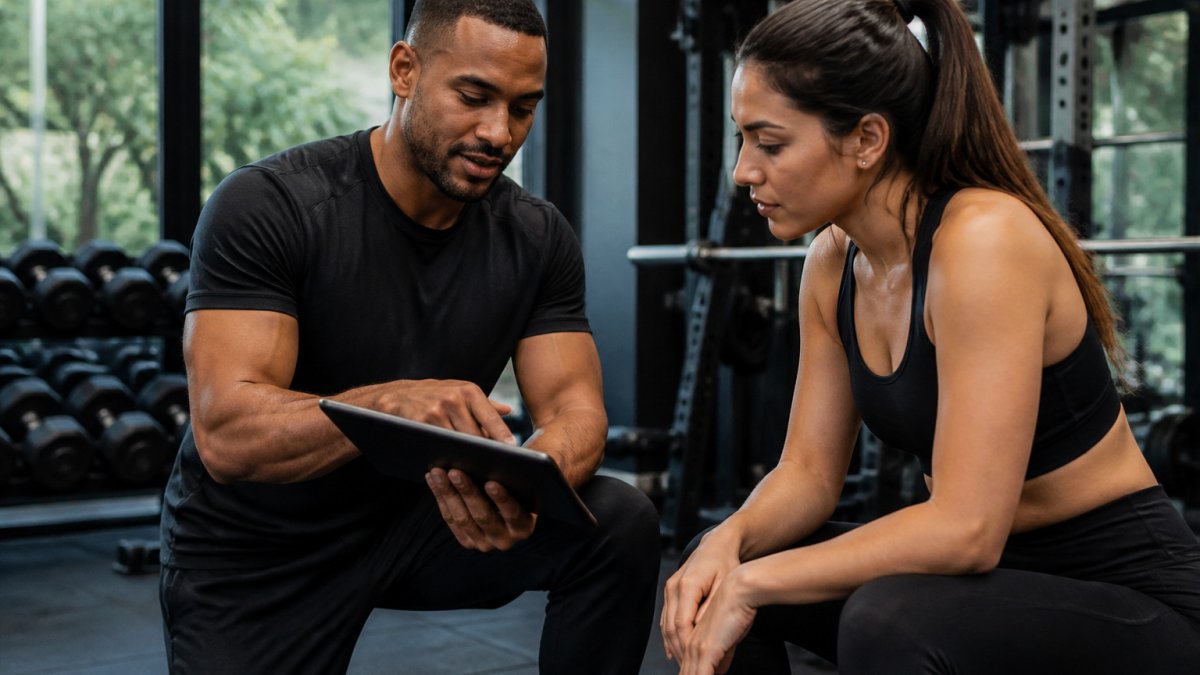
Human check-ins: a trainer reviews your week, adjusts loads, and follows up. This is the minimum tier that survives a travel-heavy quarter.
Integrated coaching: training, nutrition, recovery, and stress management are handled together, with a scheduled review cycle. This is the tier that produces measurable strength change over six to twelve months.
A simple value test
Before you buy any option, ask three questions:
Who adjusts the plan when my week collapses?
What is the review cadence, and what gets measured at each review?
What happens to my program when I travel for two weeks?
If the answer to any of those is "you figure it out," you are buying a template, not coaching. FSL Training sits in the integrated tier by design: our multi-credentialed team, including ACE, ISSA, and NASM certified trainers and a Corrective Exercise Specialist, builds bespoke 1:1 programs around each client's physiology, with data-driven dietary strategies and private meal planning. Clients who travel constantly get app-based support so the program does not reset every time they land in a new city.
Key Takeaway The right question is not which option is cheapest. It is which option you will still be using in twelve months. Accountability is what buys that longevity, and it is the one line item worth paying for.
Frequently Asked Questions
How can busy executives build strength with limited time?
Two or three 30-minute sessions per week are enough to build strength when the program is structured around compound lifts and supersets. A squat, push-up, row, and plank circuit repeated with short rest periods covers the major muscle groups. The key is exercise selection and consistency rather than session length. A bespoke strength coach can build this around your actual calendar, including travel weeks when equipment is limited to a hotel gym or bodyweight work.
Are personal training apps for executives effective?
Apps work well for logging workouts, tracking progress, and delivering programmed sessions on the road. What they handle less well is the judgment call: adjusting volume when travel disrupts sleep, or changing exercise selection around an old injury. Apps are strongest as a delivery layer for coaching you already have, not as a replacement for a coach who knows your history. Expect the best results when an app sits on top of human programming rather than replacing it.
Is online coaching or in-person personal training better for executives?
In-person coaching wins on form correction and immediate feedback, which matters most for heavier barbell work and anyone with an injury history. Online coaching wins on schedule flexibility and travel weeks. Many executives get the most value from a hybrid: in-person sessions when they are in the office, and app-delivered programming with video review when they are not. The right split depends on how often you are actually in one place.
How many strength-training sessions per week are enough for a busy schedule?
Two full-body sessions per week maintain and build strength for most people, and three accelerates progress if recovery allows. Frequency matters less than total weekly volume and progressive overload. A custom strength training program should set the minimum effective dose for your schedule, so a week with back-to-back meetings does not become a zero week. Consistency across months beats intensity across days.
What should a custom strength training program include?
A solid program includes a warm-up, compound lifts with defined sets and reps, rest periods, and a progression rule for adding weight or reps each week. It should also account for equipment access, injury history, and travel. Nutrition and recovery guidance belong in the plan too, since strength gains depend on sleep and protein intake. Review the program every four to six weeks and adjust based on actual performance data, not how you feel on a given day.
The real challenge with bespoke strength alternatives is not finding options. It is finding one that survives your calendar, your travel and your stress load without falling apart by week three. FSL Training builds bespoke 1:1 training around your physiology, integrates nutrition and stress management into the same plan, and supports you through our app when you are on the road. Book a consultation and we will map a program to your actual schedule, not an ideal one.
Book Consultation
Comments